


site search
online catalog
Holsters
Showing 21 to 27 out of 27
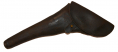
VERY NICE CONDITION EARLY CIVIL WAR U.S. CAVALRY HOLSTER
This is a very good condition early-war holster for a .36 caliber revolver with full military flap, wide belt loop secured by stitching and three rivets, toe plug, and sewn latch tab. The stitching is… (286-1332). Learn More »
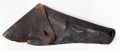
CIVIL WAR OFFICER’S BELT HOLSTER
This belt holster was made for a small revolver, likely a “pocket model” of some sort, very typical of those carried by infantry line officer as a sidearm for personal defense in addition to the… (1179-628). Learn More »
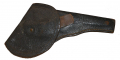
CIVIL WAR LEATHER HOLSTER FOR COLT ROOT OR SIMILAR POCKET REVOLVERS
The black leather of the holster is somewhat stiff but can be coaxed to take a weapon. The leather surface shows light crazing throughout. The holster has a rather wide flap with two parallel rows of… (490-3203). Learn More »
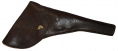
CONFEDERATE FLAP HOLSTER FOR REVOLVER
Hard to find, this is a non-regulation leather holster made to accommodate a large revolver such as a Colt or Remington “Army” revolver. The holster measures 12” along the front edge. Holster is… (1052-209). Learn More »
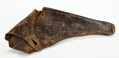
MILITARY FLAP HOLSTER FOR A .31 CALIBER REVOLVER
This is a scarce example of a privately purchased belt holster with a military style flap to carry a small .31 caliber percussion revolver, typical of those carried for personal defense by officers… (480-221). Learn More »
$446.00
Originally $495.00
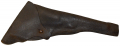
CIVIL WAR FLAP HOLSTER FOR M1849 POCKET MODEL REVOLVER
This is a black leather holster made for revolvers. The leather still shows the “profile” of a revolver cylinder and barrel. A .31 caliber “pocket” model with long barrel fits into this… (172-5636). Learn More »
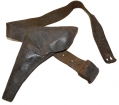
CIVIL WAR KERR REVOLVER HOLSTER ON BELT
This is a black leather holster made to accommodate the Kerr revolver. The leather still shows the “profile” of a revolver cylinder. The holster “pocket” measures approximately 9 ¼” along… (1117-97). Learn More »
Showing 21 to 27 out of 27
Most Popular
Historical Firearms Stolen From The National Civil War Museum In Harrisburg, Pa »
Theft From Gravesite Of Gen. John Reynolds »
Selection Of Unframed Prints By Don Troiani »
Fine Condition Brass Infantry Bugle Insignia »
Rare Identified 65Th Ny Sergeant’s Jacket, With Manscript Material: 1St U.s. Chasseurs »
featured item
RARE EBERLE 1796 CONTRACT MARKED BAYONET
This rare bayonet is marked by the maker in a sunken cartouche with raised letters on the base of the blade reading “Eberle.” Charles Louis Eberle emigrated to the U.S. from Germany with brothers George A. and Henry J. in 1794, arriving in… (1052-86). Learn More »
site search